
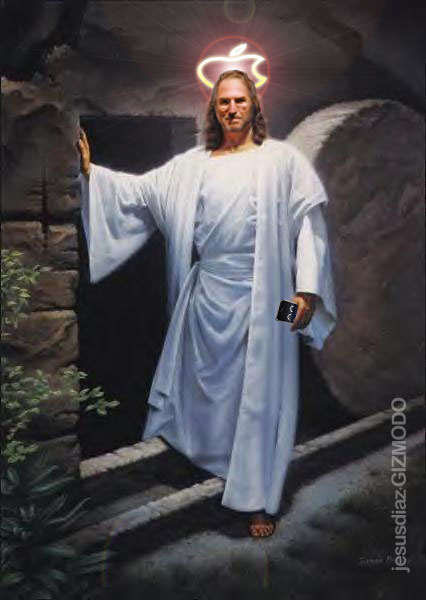
I’m a little bit embarrassed to admit this, but like millions of other Apple fanboys (as my daughter calls me, somewhat accurately) I spent a good chunk of Wednesday afternoon glued to my computer screen, watching Steve Jobs unveil the much-ballyhooed iPad.
I don’t know if the iPad will live up to the hype of being the Next Big Thing. But what struck me as I watched Jobs take the stage to rhapsodize about the wonderful capabilities of the iPad was how closely the entire spectacle and structure of his presentation resembled a old-time revival meeting.
About the only thing missing was a tent.
I don’t want to make too big a deal about this, but the similarities were striking. Leading the revival, Jobs assumed the mantle of preacher, praising the power of the new technology he introduced, promising it would profoundly improve the lives of all who embraced and accepted it, that it would deliver a transformative experience. The demonstration of the iPad’s (admittedly pretty nifty) features elicited amazed oohs and aahs from the assembled crowd. The parade of tech executives who took the stage after Jobs served as acolytes, providing witness to the iPad’s unmatched power, testifying how it had changed their lives, and how it would improve the lives of all who touched it.
We live in a time in which it’s common to put more faith in technology than God—in the frenzy leading up to the roll-out of the iPad at least one major publication referred to it as the “Jesus Tablet”. If that’s the case, is Steve Jobs the Billy Graham of the 21st century?


 Brave New Whirl